Sunday, February 17, 2013

Death, loss, and the afterlife


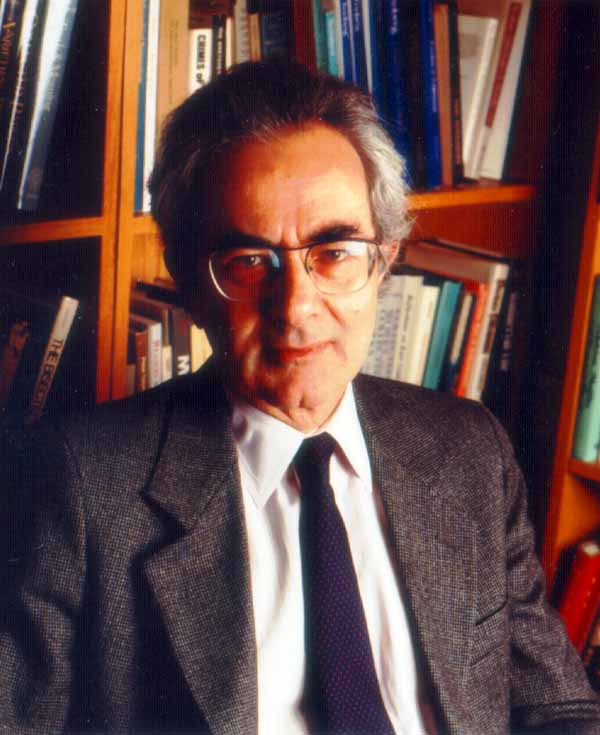
Thomas Nagel argues that death is a bad thing, even if death is the end for us. While it might seem like death wouldn't be a bad thing—after all, we wouldn’t be around to experience it!—he argues that it is bad because of what we lose, not what will happen to us. Death results in a genuine loss of experiences, and it is in this loss that a person is harmed. But what is a Christian to think of this? Does death result in a genuine loss?

I’m inclined to think that we do genuinely lose something when we die. Christians do hope for the resurrection of the dead and the life of the world to come, but this is still only hope, not certainty. And by most convincing accounts, that life is not necessarily a direct continuation of the life we have now. When we die, our experience is more or less over. It may be that a heavenly afterlife is better in quality than our lives now, but it might be hard to say that we will really be the ones experiencing it. Perhaps the change in quality precludes a strictly continuous existence. So even if we experience some sort of resurrection life, this life is lost in some meaningful way. 

I would argue that losing this life—even if we go on to experience some other sort of life after death—is a genuine loss. The afterlife isn’t going to be a place where we can go on living this life. It isn’t a place where we can accomplish all of the things we wish we could have done the first time around. Relationships will be genuinely lost. If my father were to die tonight, the experiences he could have with my mother would be lost not just to her, but to him as well. With an afterlife, he may go on to experience different things, but some genuinely good experiences would be rendered impossible. So I would agree with Nagel that death is bad because of what we lose when we die—regardless of the existence of an afterlife. 

What do you think? Does death involve genuine loss, or does the afterlife negate this concern?

Thursday, February 14, 2013

Some thoughts on capital punishment


After an extended break from blogging due to a crazy schedule last semester, I'm back. For the next few weeks I'll be posting some thoughts I've had--mostly in regards to ethical issues that affect contemporary life.

In Jeffry Reiman’s essay The Folly of Capital Punishment, he argues that the death penalty is barbaric and should not be utilized in civilized societies. He concedes that the death penalty fulfills the requirements of retribution, i.e. it is deserved and satisfies the demands of justice in a retributive sense. However, he also posits that life imprisonment is a just punishment that satisfies the demands of justice. In addition, he argues that the death penalty is no more effective at deterring grave crimes (like murder) than life imprisonment.

Critical to his argument is his comparison of torture and other barbaric punishments to capital punishment. Reiman says that two key features that make torture repugnant are shared by capital punishment, namely

1)      Intense pain is inflicted on the accused and
2)      That person is completely subjected to the power of others.

But are these grounds for classifying capital punishment as horrible, like Reiman does? And even if they are, is life imprisonment different in any appreciable way?

It can be argued that life imprisonment falls under both of these categories. Reiman does not limit pain to a physical response. Indeed, the psyche carries the brunt of the punishment in his description of capital punishment. It is primarily the psychological pain that he objects to. But it could also be argued that life imprisonment causes significant psychological discomfort and pain. Reiman quotes Camus, saying “a man is undone by waiting for capital punishment well before he dies.” But it isn’t too much of a stretch to say that a man may be undone by wasting away behind bars long before he dies. The psychological pain inflicted upon those imprisoned may be thought of as part and parcel of their punishment.

As for the second point, it seems clear that a person who is imprisoned—especially for life—is subjected completely to the power of others. It is in this complete subjection that psychological pain is inflicted. Being forced to live in a prison cell against one’s will certainly seems like a way for the state to exert total power over a person’s life.

While capital punishment may be deemed horrible, as defined by the two premises above, it isn’t clear that Reiman’s alternative of life imprisonment is in any appreciable way exempt from this objection. And it would certainly be possible for a person to dispute his claim that life imprisonment satisfies the demands of justice in all cases. Perhaps there are times when capital punishment is what is justly deserved. If both capital punishment and life imprisonment are equally horrible, desert may be the appropriate measure in determining which punishment should be meted out.